An Amelia Earhart plane story, told as a short story: on a remote atoll in Kiribati, a young heritage observer must stop a TV producer from calling a shiny reef panel "Amelia's plane" on live TV. This is fiction, so the people, the boat, and the panel are made up. However, the island and its history are real. In fact, on October 14, 2026, a real expedition began a sonar survey of the "Taraia Object" in the island's lagoon, and an update on its identity is expected soon. This story does not say what that object is.
Silver on the Reef
The panel was shining before the sun was even up.
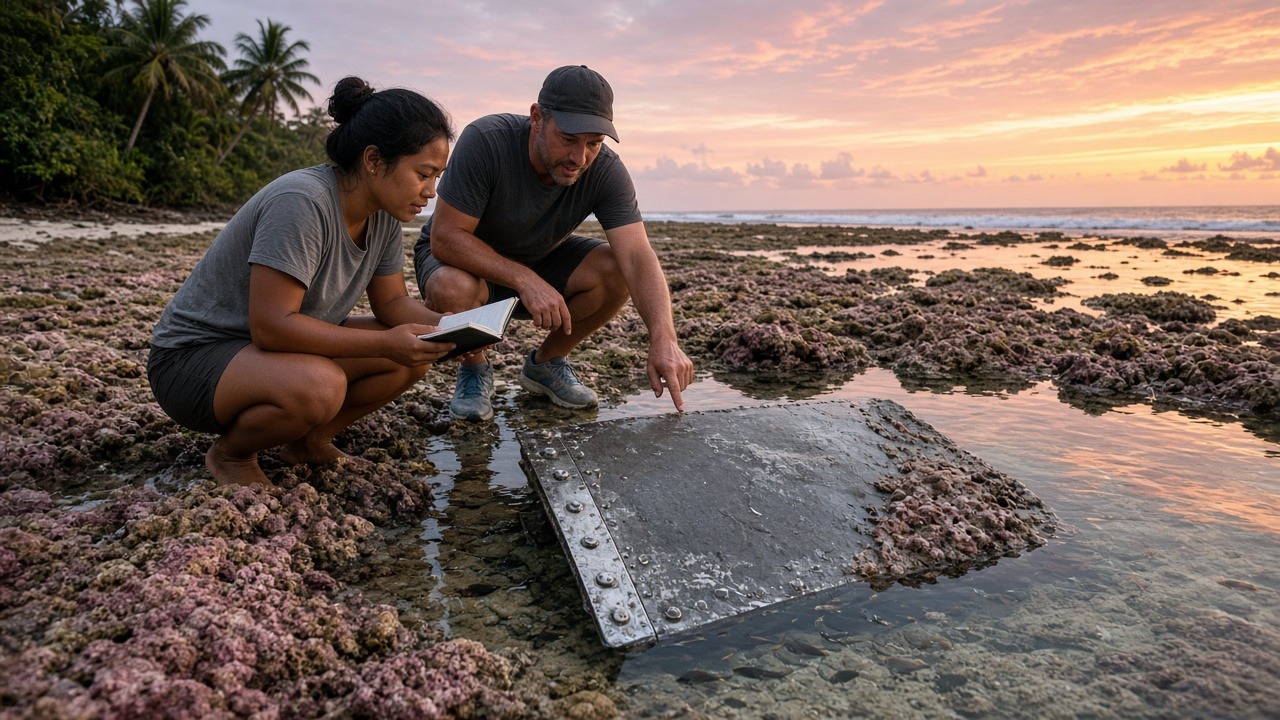
It lay on the reef flat at low tide, half in a pool of warm water, half under a crust of pink coral. It was about the size of a car door. Meanwhile, small fish moved around it like they had always known it was there.
Danny saw it first. Then he ran back across the reef in his wet sneakers, waving both arms. "Bird! Bird, come here! Bring your little book!"
So I came. Because I am the observer, I always come.
When I got close, the metal was dull gray, but where the waves had rubbed it, it flashed silver. A line of rivets ran down one edge. I knelt and looked at them for a long time.
Then I wrote in my notebook: Rivets too round. Like Skip's old navy toolbox.
Still, it was a small, silly thought. After that, I forgot about it for two days.
"That's aluminum," Danny said. He was breathing hard. "That is airplane aluminum, Bird. On this island."
"It is metal," I said. "On a reef."
He laughed, but his eyes stayed serious. "Okay. Sure. Metal on a reef. Can you stand next to it? Just for one shot?"
The Girl from the Ministry
My real name is Teretia. However, my little brothers call me Bird, because I am small and I talk too much. Now everyone calls me Bird, even the TV people.
I am twenty-four. Also, I am the most junior officer in the Culture and Museum Division in Tarawa, part of the Ministry of Culture and Internal Affairs. Most days, I count old canoes and write down stories from grandmothers. This was my first trip this far from home.
Nikumaroro is in the Phoenix Islands, very far out. Since the 1960s, nobody has lived there. In fact, the whole area is a protected park, full of birds and sharks and coconut crabs as big as cats.
Because it is protected, nobody visits without a permit. And every research boat must carry a government observer. This time, the observer was me.
My job sounds simple. First of all, I watch. Then I write things down. Above all, nothing leaves the island without the ministry's say. There is no digging without permission. And there is no taking, not a shell, not a bone, not a bolt.
Life on the Lady Vai
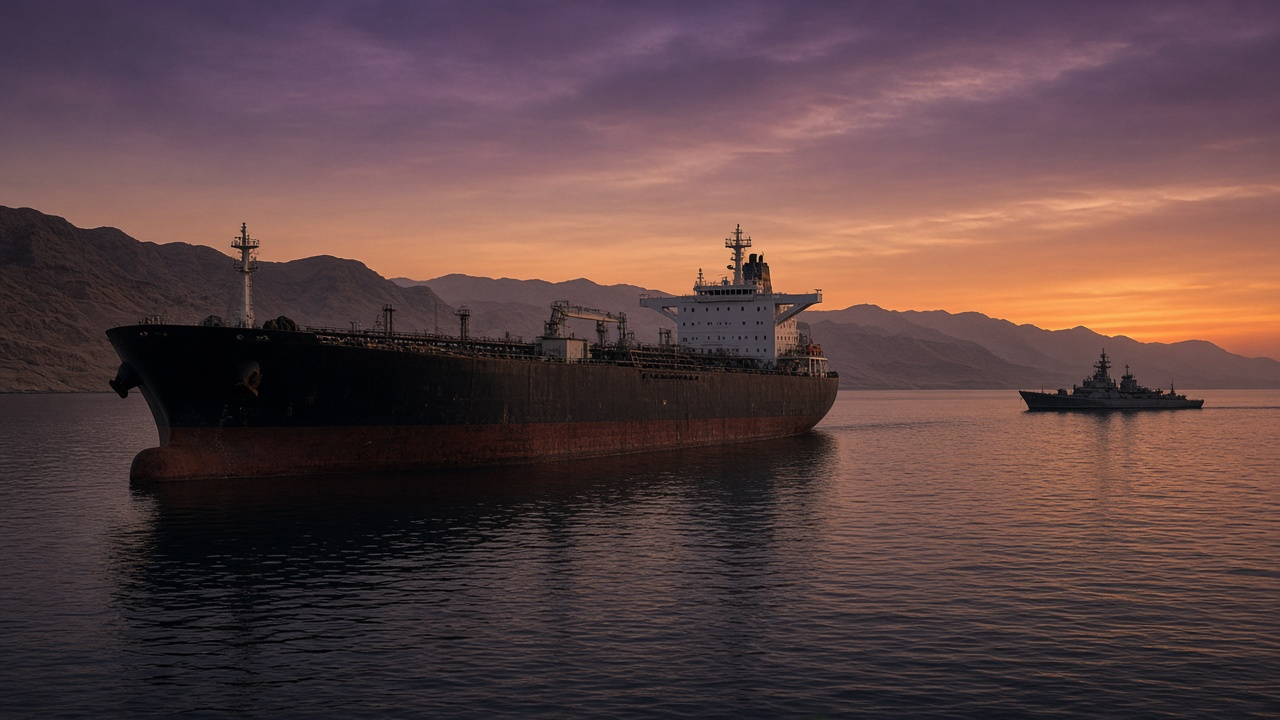
The boat was the Lady Vai, out of Suva in Fiji. She was old and white, and she smelled of diesel and fried fish. A TV network had paid for the trip. They were filming a show about the lost flier, and they had a side-scan sonar and a magnetometer on a little inflatable boat. With them, they planned to search the lagoon for a dark shape they called "the Smudge."
We slept on the boat every night. Partly that was because of the crabs. Mostly, though, it was because the anchorage off the west end is the only safe one, and only when the trade winds blow from the southeast.
Skip and the Weather
Skip was our captain. He was a big, slow Fijian man in his fifties with gray in his beard and a voice like a low engine. Also, he never hurried and he never shouted.
Every morning he stood on the deck with his coffee and looked at the sky. Then he decided if we went in or not. After all, nobody argued with Skip.
On our second morning the wind came up hard. The swell was taller than the dinghy. Skip looked at it for one minute and said, "No."
Danny begged. "Skip, buddy, it's one run. We lose a whole day of filming."
"Better a day than a dinghy," Skip said. Then he went down to fix a pump, carrying his old green navy toolbox. It was dented and older than all of us, with fat round rivets on the corners.
So we lost the day. Meanwhile, Danny sat in the galley with his two phones, his laptop, and his sunburn, doing math. Because each day at sea cost the network a lot of money, every lost day hurt. Now he had one less day and nothing on camera.

History, Told Fast
That night, Danny asked me to tell the history for the camera. I told it short and plain, because it is a sad story and it does not need decoration.
In July 1937, the flier and her navigator left Lae, in New Guinea, in a silver twin-engine Lockheed Electra. At the time, they were looking for Howland Island, a tiny dot in the Pacific. However, they never arrived. This island, called Gardner Island then, is about four hundred miles southeast of Howland.
In 1938, settlers from the Gilbert Islands came to plant coconuts. Then, in 1940, a British officer found thirteen bones here and sent them to Fiji. People have argued about those bones ever since.
During the war, the Americans built a radio navigation station on the far eastern tip. Later, after years of drought, the settlers gave up and left in 1963. Since then, the island has belonged to the birds.
"And the metal?" Danny asked. "What metal is on this island that isn't hers?"
So I counted on my fingers. "There is the Norwich City, a steel ship that wrecked on the reef in 1929. There are old tin roofs from the village. And there is junk from the war station."
"Steel ship, tin roofs," Danny said. He snapped his fingers. "So aluminum points to a plane. Right?"
"Aluminum points to aluminum," I said.
Lou, the camera man, laughed so hard he had to stop recording.
What I Heard Through the Wall
Unfortunately, the Lady Vai has thin walls. Danny's cabin was next to mine.
At first, I did not mean to listen. But the sat phone makes people shout, and Danny was shouting, though in a tired, polite way.
"No, I hear you," he said. "Friday, eight p.m. New York. Live. I know."
The island is seventeen hours ahead of New York. So Friday night there would be Saturday afternoon here, at low tide.
"I don't need it to be her plane," Danny said. "I just need nobody to say it's not her plane. Not by Friday."
Then there was a long pause.
"The girl from the ministry," he said. "If she stands next to it, that's the shot. That's the government standing next to it. That's the whole show."
For a while, I lay on my narrow bunk and looked at the ceiling. Above me, the generator hummed. Meanwhile, in the dark outside, the reef was breaking white, over and over, like someone clapping slowly.
The Boss on the Phone
In the morning, I called my boss in Tarawa. Everyone in our office calls him the Boss, even his wife.
The line was bad. Still, his voice was clear enough.
"Bird," he said. "Listen to me. Their permit fees pay our reef rangers for a year. A whole year. Watch them, but don't scare them off."
"They want me on camera," I said. "Next to a piece of metal. Saying her name."
He was quiet. Behind him, I could hear a rooster, a truck, and the sea. Home sounds.
"Do you know what it is?" he asked.
"No."
"Then you say no," he said. "But politely. You are not there to make TV. You are there so that in fifty years, someone can read your notes and trust them."
"And if they leave?"
"Then they leave," the Boss said. However, he did not sound happy about it.
The Amelia Earhart Plane Question
Danny found me on the back deck, by the stern. He had brought two cups of coffee, which is how I knew he wanted something. "Ko rabwa," I said, which means thank you.
"So here's the plan," he said. "Saturday, low tide. You stand by the panel. Lou starts wide on the reef, then pushes in. I ask, 'Could this be part of the Amelia Earhart plane?' And you just say, 'It could be.' That's all. It's true, right? Anything could be."
"Danny," I said, "a cloud could be a sheep."
He rubbed his face. Under the sunburn, he looked tired. In fact, he looked about ten years older than the man who had come aboard in Suva.
"You don't get it," he said, though without anger. "I have eleven people on this boat. If this show dies, they don't eat in January. Lou has a baby coming."
"I know," I said. And I did. Even so, I could not say it.
Instead, I made him a deal. Before Saturday, I would record the panel properly: photos, scale bar, GPS, and every rivet. With the Boss's permission, I could brush loose sand off the surface with a soft brush and seawater. Nothing would be lifted or taken. Then we would know more, and he could film all of it.
He looked at me for a long moment. Finally, he said, "Deal. But if it's her, you say it."
"If it is her," I said, "I will say it so loud they hear it in Tarawa."
Rivets Do Not Lie
The Boss said yes, with a long list of rules. So on Friday morning, Skip ran us in through the swell, and we walked out across the reef at low tide.
First, I drew the panel by hand, the way my teacher taught me. After that, I photographed it from every side with a scale bar, then measured the rivets.
Right away, they looked wrong. Or at least, they were wrong for a plane.
An airplane skin is thin. So its rivets are usually small and set close, in tidy rows. These were fat, round heads, as big as peas, set wide apart. They were the kind you put on something that gets kicked and dropped and thrown in the back of a truck.
"Like Skip's toolbox," I said out loud.
Danny frowned. "Old planes were built by hand too, you know."
"Yes," I said. "That is true." I wrote it down, because it was fair.
Then I started brushing. Slowly, one small square at a time, with seawater from a bucket, I worked across the crust. Little crabs ran out of the cracks. Lou filmed my hands.
Under the pink coral, there was paint.

Letters Under the Coral
At first, it was only a shadow. Then, as the water ran off, it became a shape. First a straight edge, then a corner, then a letter.
Suddenly, everyone went quiet. Even Lou stopped breathing behind his camera.
It was a stencil, the blocky kind painted through a cut card. The paint was old and pale, but the letters were still there.
U.S.C.G.
Under that, in smaller letters: UNIT 92.
Danny read it twice. Then he said, "What is U-S-C-G?"
But I already knew, and my hands were shaking. I wiped them on my shorts and pulled my binder out of my dry bag. Inside, I kept copies of old reports about every known site on the island.
The war station on the eastern tip was a United States Coast Guard LORAN station. During the war, it sent timed radio signals so ships and planes could find their way across the empty Pacific. A construction crew landed in July 1944. After that, it was run by twenty-five men, living in round metal huts. It was listed as Coast Guard Unit 92.
The settlers had a name for that end of the island. They called it Ameriki.
I looked up. Down the reef, the eastern tip was a gray line of scrub under the morning sun. It was close. In fact, it had been close the whole time.
Twenty-Five Boys
Near the edge of the panel, under the last of the crust, there were scratches. Unlike the stencil, they were not painted. Someone had cut them by hand, with a nail or a knife.
As I brushed, they became tally marks. There were long rows of them, in groups of five, like a prisoner counting days. Next to them, in rough capital letters: 25 OF US. XMAS 44.
Nobody said anything for a long time.
Then Skip spoke very softly. "Boys," he said. "They were just boys. Eighteen, nineteen. Out here, four hundred miles from anywhere, keeping the lights on for everyone else."
For a while, I thought about them. Twenty-five young men on a strip of coral, far from home, counting days. Meanwhile, the war roared somewhere over the horizon, and the radio signals went out from this beach every night to guide ships they would never see.
Nobody had made a TV show about them. Besides, nobody had looked for them in eighty years. So they were castaways too, in a way.
Danny sat down on the wet reef in his sneakers. He looked at the tally marks, then at me.
"It's not her," he said.
"No," I said. "It is them."
The Other Castaways
That night, Danny called New York again. This time, I did not have to listen through the wall. He did it on the open back deck, where everyone could hear.
"It's not the Amelia Earhart plane," he said. "No. I'm sure. The government observer is sure. It's stenciled."
A long pause. Somebody on the other end was talking fast.
"Listen to me," Danny said. "It's better. Picture twenty-five kids at Christmas in 1944. It's real, and nobody's ever seen it. So we call it 'The Other Castaways.' We still go live, and we still show the lagoon. But this time we tell the truth."
When he hung up, he turned around and looked at all of us. "They said yes," he said, a little surprised. "They said yes."
Lou whooped. Skip nodded once, the way he does when the weather is good.
Later, I called the Boss. He listened to the whole thing without a word.
"So you said no," he said at last.
"I said no," I told him. "Then the reef said no for me."
He laughed, the first time on this whole trip. "Good," he said. "Write it all down."
The Last Low Tide
On Saturday afternoon, island time, we went live to New York at low tide.
In the end, I stood next to the panel after all. Except I did not say "It could be." Instead, I said what it was, and whose it was, and how long it had waited. Then Lou panned down to the tally marks, and I stopped talking, because nobody needed my voice for that part.
Afterward, the TV people went back to the boat to pack up the cables. Behind us, across the thin strip of land, the sonar team kept running slow lines over the Smudge. Their machine pinged and pinged, still looking for her. Some mysteries are patient.
By then, only Skip and I stayed on the reef. He had carried his old green navy toolbox all the way across the coral. When I asked why, he only shrugged.
Then he set it down in the wet sand, right beside the panel.
Side by side, the two of them lay there in the late gold light. They were the same dull gray. They had the same fat round rivets, as big as peas. And on the toolbox lid, worn almost away, the same blocky stencil letters, painted through the same kind of cut card, in the same war.
Past the low scrub at the tip, out on the lagoon, the little sonar boat turned for another pass, and its light blinked on.


Leave a Reply