Season One: The Summer We Changed
A small town drama story in 26 parts. Bellmere, Michigan. June.

The Car Pulls Away
Lily cried for the first mile of the goodbye and none of the last.
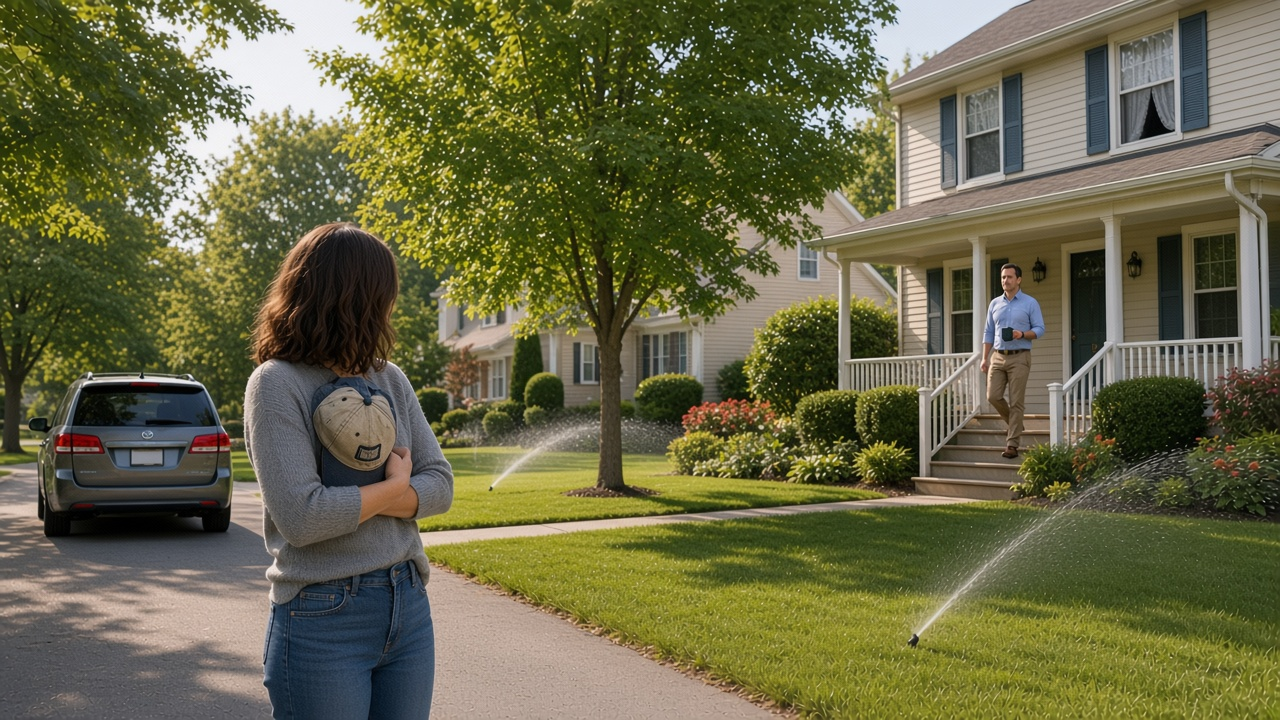
Sarah knew this because she stood at the end of the driveway long after the gray minivan turned at the stop sign. She had watched her daughter’s face in the back window. At the house, Lily had been red and wet and furious. By the corner, she was already pointing at something on Ben’s tablet. After that, the van was gone, and the street went back to sprinklers and somebody’s radio.
“She’s fine,” Tom said as he came down the porch steps with his coffee. “She’ll call tonight to tell you Grandma lets her have pop with dinner.”
“Grandma does let her have pop with dinner.”
“See? Crisis over.”
Eight Weeks
Sarah laughed, because he wanted her to. Even so, she kept her eyes on the stop sign. Ben, on the other hand, had not cried at all. After all, he was twelve now, which meant he hugged her with one arm and said “Bye, Mom” toward the ground. Still, at the last second, he had turned back. He’d handed her the old Bellmere Bait & Tackle cap he never took off and said, “Hold this so I don’t lose it at camp.” Then he got in the van fast, before she could look at him too closely.
Even now, she was holding the cap. It smelled like sunscreen and boy.
Then Tom put his hand on the back of her neck, warm from the mug. “Eight weeks,” he said. “First two at the lake with my folks, six at camp. We can do eight weeks.”
“I know we can.”
“I mean we can enjoy eight weeks.”
She looked up at him. Of course, he was grinning, the easy grin he used on difficult guests at The Lantern Room. Yet under it, she saw something else, something careful. However, she could not tell what it was. After fifteen years, she could still read almost all of him. It was the small part she couldn’t read that kept surprising her.
Just then, next door, a basketball hit the Parkers’ garage and bounced into the hedge. Soon Greg jogged after it, all elbows and knees in his team jacket, and lifted a hand to them without quite looking over.
“Morning, Mr. and Mrs. Miller.”
“Morning, Greg,” Tom called. “Big game?”
“Just practice.” Greg found the ball, laughed at nothing, and went back to his hoop.
Finally, Sarah turned toward the house. Above her, the maple threw a wide shade over the lawn. The blue-gray shutters needed paint again. Meanwhile, upstairs in Lily’s window, the white lace curtain Sarah’s mother had hung nine years ago lifted a little in the breeze. It looked, for a second, as if someone were standing behind it.
Nobody was there, though. That was the point. Nobody was home but them.
The Sound of a Quiet House
By ten-thirty, Sarah had discovered that quiet made noise.
For example, the refrigerator hummed. The dishwasher clicked through its cycles. A fly kept knocking against the kitchen window, the one that faced the Parkers’ yard. Moreover, every room still had something left out. One of Lily’s purple sneakers sat under the table, its partner presumably on its way to the lake. Ben’s cereal bowl had a single Cheerio fixed to the rim like a tiny life ring.
First, she washed the bowl. Then she stood at the sink with her hands in the water and did nothing at all.
For twelve years, her mornings had been loud.
Hands With Nothing to Do
Back then, someone needed a permission slip, or a swimsuit, or a ride. Someone had lost a shoe and blamed the dog they did not own. Back then, she used to dream about a morning like this one. In the dream, she read a whole book on the deck. Also in the dream, she was a person with hobbies.
Now that the morning was here, and she didn’t know what to do with her hands.
“You okay in there?” Tom called from the dining room. He was at the table with his laptop, building next week’s staff schedule.
“I’m fine. I’m washing a bowl.”
“One bowl?”
“It’s a very important bowl.”
He laughed. Then the house went quiet again, and she heard him typing, steady and sure. Unlike her, Tom always knew what to do with his hands. Still, he managed The Lantern Room the way some men played golf, with pleasure and a little showing off. On busy Saturdays he could seat two hundred guests, calm a crying bride, and remember that the man at table four hated cilantro.
Finally, she dried her hands and leaned in the doorway. As usual, he had his sleeves rolled to the elbow, the way he always did. Even his dark watch caught the light.
“What time is lunch?” she asked.
“Twelve-thirty. Emily texted twice. She says she has ‘so many pictures.’ Capital S, capital M, capital P.”
“Of course she does.”
“David texted once.” Tom read from his phone. “‘Looking forward to it.’ Period.”
“That sounds like David.”
“That’s a whole novel for David.” Tom shut the laptop. Then he looked at her, the way he did when he was about to make a joke he’d practiced. “You know what this means, right? No kids, no sitter, and no one yelling ‘Mom’ at the bathroom door.”
“It means we can go to lunch without packing snacks.”
“It means,” Tom said, standing, “that we are basically on our honeymoon. Again.”
Then he kissed her. It was a good kiss, and also a fast one, because his phone buzzed on the table. So he checked it over her shoulder. Someone at the restaurant had a question about the walk-in cooler.
“Sorry,” he said. “Two minutes.”
By then it was eleven, so she went upstairs to change.
What to Wear to an Ordinary Lunch
At first, the closet was not the problem. The problem was the mirror.
Sarah stood in front of it in her denim and a gray knit top and thought, This is fine. It was the outfit of a woman who would bring the right number of napkins. Her chestnut hair fell to her shoulders in loose waves, parted on the left the way it had been since college. Then she leaned closer. There, too, was the tiny beauty mark near her right cheekbone that Tom used to call her “full stop.” He hadn’t called it that in years. She wasn’t sure he remembered.
So she pulled out the green wrap dress instead. She’d bought it for a wedding two summers ago and worn it once.
However, she put it back. It was lunch at The Corner Table. People ate patty melts there.
In the end, though, she chose the gray knit, a soft blue cardigan, and her mother’s gold pendant. She told herself the pendant was for luck. However, she couldn’t have said what kind of luck she meant.
Downstairs, meanwhile, Tom was still on the phone. He gave her a thumbs-up, then a second, slower look, as if he’d noticed something and couldn’t name it.
“You look nice,” he mouthed.
She smiled. After that, she went to start the car.

The Corner Table
The Corner Table sat at the bend of Front Street, where Bellmere’s main road turned to follow the lake. Long before, it had been a hardware store. The old shelves still ran up one wall, holding cookbooks and mason jars and a stuffed pike named Gary. Since it was summer, the big front windows stood open, and you could smell fryer oil, lake water, and the sweet rot of lilacs going past their prime.
Emily saw them first. Of course, she did.
“There they are! The empty nesters!”
Then she came across the room in a yellow jumpsuit and three bracelets that rang like wind chimes. Her honey-blonde hair was long and loose, and she was tanner than any woman in Michigan had a right to be in early June. As always, she hugged Sarah hard and held on one beat longer than people usually do. That was so like Emily. She held hugs and eye contact and opinions one beat too long, and she dared you to look away first.
“You look amazing,” Emily said. “You look rested. Are you rested? You’re not rested. You’ve been crying in the car.”
“I have not been crying in the car.”
“She cried in the driveway,” Tom said.
“I did not cry in the driveway. I held a hat.”
Meanwhile, David stood when they reached the booth. He was the kind of man who stood when people reached the booth, and he wore a dark shirt and a light summer blazer even though it was seventy-eight degrees, and his short beard was trimmed so neatly it looked drawn on. After that, he shook Tom’s hand and kissed Sarah’s cheek.
“Thanks for coming,” he said. “I know it’s a big day for you two.”
That, too, was David. He noticed things, and then he said them quietly, as if he didn’t want credit for it.
Soon they slid into the corner booth, the same one they had shared a hundred times. Before David, it had been Sarah, Tom, Emily, and whoever Emily was dating. There had been a lot of whoevers. Then two years ago, Emily had come to lunch alone. She had said, “I met someone, and he irons his jeans, and I think I’m going to marry him.” Everyone had laughed. Emily had not. Sarah remembered that, because Emily always laughed at her own lines. She had married him in April, under a white tent at the Bellmere Yacht Club, in a dress with no back.
Now, though, there was a ring on her hand that caught the light every time she moved. She moved a lot.
Honeymoon Stories
“Okay,” Emily said, before anyone had looked at a menu. “Before you ask. Yes. Portugal was perfect. I am now a different person. I have a new favorite color, and it’s the color of Lisbon at six in the evening.”
“What color is that?” Tom asked.
“It’s like, peach. But sad.”
“Sad peach.”
“Happy-sad peach. David, show them.”
David took out his phone without a word and turned it toward them. On the screen, Emily stood on a tiled stairway in a white sundress, laughing at someone off-camera. Behind her, the old roofs ran down a hill toward the river.
“I took that,” David said, and Sarah heard a small, plain pride in it.
After that, the pictures kept coming. Emily ran the slideshow, and David ran the facts. First came the hotel with the iron balcony. Next came the tram that nearly took Emily’s purse off her shoulder. Finally, there was the tiny bar in the Alfama, where an old woman sang fado so sad that Emily cried into her wine.
“I didn’t cry,” Emily said.
“She cried,” David said.
“I glistened.“
Meanwhile, the waitress came, so they ordered without looking. Tom ordered the patty melt, while David ordered the whitefish. Emily ordered a salad and then stole Tom’s fries, the way she always did. Sarah, meanwhile, ordered soup because it was the first word she saw.
Fog on the Cliffs
“Then we went to the Azores,” Emily said. “Which—Sarah. You’d die. It’s like the whole island is a garden somebody forgot to stop growing. Hot springs in the middle of the woods. Cows on the cliffs. Fog in the mornings. Oh, and David got us a room with a hot tub on the deck, and you could see the ocean from it, and—” She stopped. She grinned. “Well. I’ll skip that part.”
“Please skip that part,” Tom said.
“There was a hot tub. That is all you need to know.”
“Tell them about the resort,” David said. “The third night. The lounge with the band.”
“Oh, it was lovely.” Emily said it fast, the way you answer a question you’ve already practiced. She reached for a fry and didn’t eat it. “Lanterns everywhere. Very fancy. David fell asleep at nine-thirty like a grandpa.”
“I’d been up since five,” David said, mildly. “Somebody wanted to see the sunrise from the crater.”
“And it was worth it.” Emily touched his wrist. Then her fingers went to her own collarbone and rested there, light, as if she were checking for a necklace she hadn’t worn.
David swiped to the next photo. It was the resort terrace at night, strings of small lights, and past the railing a dark sweep of ocean with the moon broken up on it. Nobody was in the picture.
“I took that one the next morning,” he said. “Well. Late that night, actually. Em came in and woke me up and said I had to see the moon.”
“It was a good moon,” Emily said.
She looked at the photo a little longer than she had looked at the others. Then she took the phone out of his hand, kindly, and swiped past it to a cow standing on a cliff. “Okay, this one. This is my son now.”
Meanwhile, David’s ears went red. However, he looked pleased. Still, under the table, Sarah saw his thumb move once around his wedding ring, slow and round. It looked as though he was checking that it was still there.
Two Months In
“So how is it?” Tom asked. “Married life. Two months. Report.”
“It’s very official,” Emily said. “We have a joint account. We have towels that match. Someone gave us a gravy boat, and now we’re the kind of people who own a gravy boat.”
“It’s good,” David said. Then he looked at Emily when he said it. “It’s really good.”
“It’s so good,” Emily said, and she leaned into his shoulder, and Sarah believed her completely. Emily had never been able to fake being happy. It was the one thing she was bad at.
Of course, the words were simple. Even so, Sarah felt them land somewhere under her ribs. David said it the way you’d say the lake was cold or the sky was blue. To him, it was simply a fact, and he didn’t need to dress it up.
“What about you guys?” Emily asked. “Fifteen years. Give the newlyweds some advice.”
Tom leaned back in the booth and spread his arms along the top of it. “Advice. Okay. Never let her pick the movie.”
“Hey,” Sarah said.
“Always let her pick the restaurant. And when she says, ‘I’m fine,’ she’s fine. Don’t dig. You’ll hit a pipe.”
Emily laughed, and David smiled politely. Sarah laughed too. Still, she noticed she was laughing about half a second after everyone else. It was like a song where the singer comes in a little late.
“No, really,” Emily said. “What’s the secret?”
Tom shrugged. “We like each other. We don’t keep score. And I make her dinner every Sunday whether she wants it or not.”
“That’s sweet.”
“It’s lasagna. It’s always lasagna.”
“I like the lasagna,” Sarah said. It was true. She did like the lasagna. She had liked it every Sunday for eleven years.
A Name From Next Door
Soon the food came. Before long, Tom’s patty melt dripped onto the paper. Sarah’s soup was tomato basil, too hot to eat, and she stirred it while the talk moved on without her.
First, Tom told the story of the bride who fainted into the cake at The Lantern Room in May. He told it well, because he always did. Then he did the voice of the groom’s mother. He showed with his hands how the top tier had tilted, slow as a ship going down. In fact, David laughed until he had to wipe his eyes, which Sarah had never seen him do.
Then, while David was still laughing, Tom said, “Oh, and the Harborlight thing is happening. August. The big charity dinner for the hospital wing. I’m running the food. Emily, you two should come. Black tie. Silent auction. Lots of rich people pretending to like each other.”
“I love rich people pretending,” Emily said. “David, put it in the calendar.”
“I’ll be in Grand Rapids most of August,” David said. “The new client. I told you.”
“You’ll come back for one night.”
“Maybe.” Then he checked his phone, as if the calendar might answer. “We’ll see.”
Then Emily waved a fry at him. “We’ll see,” she said, in a deep, careful David voice, and everyone laughed. Even David laughed. Yet Sarah saw Emily’s eyes stay on him a moment after the joke had passed, soft, the way you look at something you’re glad is yours.
Somewhere behind the counter, the radio slid into an old slow song, a woman’s voice and a lazy saxophone. Emily stopped mid-sentence. She turned her ring once on her finger and looked out the open window at the lake, and for three or four seconds she was somewhere that was not The Corner Table.
“Em?” David said.
“Sorry. I love this song.” She smiled at him. “I don’t even know what it’s called.”
“Speaking of coming back,” Tom said. “Guess who Carol Wilson says is moving home?”
At that, Sarah looked up from her soup.
“Jake,” Tom said. “Little Jake Wilson. Their old house next to ours, before the Parkers. He’s been out in Denver, or Seattle—somewhere with mountains. Carol says he’s done with it. Coming back for good.”
“Little Jake?” Emily said. “Isn’t he, like, thirty?”
“Thirty-two,” Sarah said.
Still, she hadn’t meant to say it. It came out in a plain, quick way, like a phone number she’d once known by heart. Immediately, Tom glanced at her, his eyebrows up.
“Look at you,” he said. “Keeping track.”
“He was in Ben’s baptism pictures,” Sarah said. “It’s on the back of the frame.”
That was true as well. Nevertheless, she felt her face warm, and she bent over her soup until it passed.
What Emily Saw
Afterward, Sarah couldn’t have said exactly when the lunch turned. After all, nothing happened. That was the strange part. The talk was easy, the booth was cool, and outside a man walked by with a cooler on his shoulder, whistling.
But somewhere between the Azores and the check, she had gone quiet.
Yet it wasn’t sadness, exactly. She was happy for Emily. She loved David’s red ears and Emily’s terrible fado story. Instead, it was something closer to the feeling of standing on a dock and watching a boat go by. The boat wasn’t doing anything to you. It was just going somewhere.
“Sarah.” Emily’s voice was low. Tom and David had gotten into a mild argument about the Tigers’ bullpen. “Bathroom. With me.”
“I don’t need—”
“I do. Come.”
The restroom at The Corner Table was a single room with a pull-chain light and a framed photo of the 1974 ice storm. Once inside, Emily locked the door behind them and leaned against the sink. However, she didn’t fix her lipstick. She just looked at Sarah, the full Emily look, steady and blue.
“What’s going on with you?”
“Nothing.” Sarah lifted her eyebrows a little, the way she did before she asked something hard. Then she didn’t ask it. “I’m tired. It’s a weird day.”
“You laughed at Tom’s lasagna joke like someone had a gun to your head.”
“I did not.”
“Sarah. I’ve known you for twelve years. You laughed like a hostage.”

Behind a Locked Door
At last, Sarah sat on the edge of the old radiator, which was cold, and looked at the photo of the ice storm. Every branch in it was wrapped in glass.
“Do you ever,” she began, and stopped.
Emily waited, because for once, she didn’t fill the space.
“When you were talking about the hot tub,” Sarah said slowly. “Not the hot tub. Just—the way you said it. Like it was yours. Like you were still in it.” She shook her head. “I don’t know what I’m saying.”
“You’re saying you want a hot tub.”
“I’m saying I can’t remember the last time I said anything like that. About my own life.”
For a while, Emily was quiet. Then something moved across her face, quick, like a cloud over the lake. Her mouth opened. She laughed—not her big laugh, a small one, the nervous one Sarah had known for twelve years.
“Sarah, can I tell you something? About the trip, I mean. It’s not—”
Just then, someone knocked on the door. Three polite knocks.
“Em?” It was David. “They’re bringing the check. I’ve got it, I just wanted—are you okay?”
Emily’s face snapped back into place so fast that Sarah almost missed the change. “We’re fine! Girl talk! Two minutes!”
“Okay,” David said through the door. He didn’t move away right away. Then they heard his steps go back across the old wood floor.
Afterward, Emily turned on the tap and ran her hands under it, though she hadn’t touched anything.
“What were you going to tell me?”
“Nothing.” Emily turned off the water. She smiled, all teeth. “Honestly. Nothing happened. It’s silly.” She dried her hands on her jumpsuit. “That the fado lady was actually a man. I’ll tell you later. Come on, he’ll pay for everything and then feel weird about it.”
The Drive Home
Tom drove, since he liked to drive after a good meal, one hand on the wheel and the window down, his elbow out. Meanwhile, the lake flashed between the houses on Shore Road, blue and white and blue again.
“That was fun,” he said. “Right? That was fun.”
“It was fun.”
“David’s a good guy. I like David. I didn’t think I’d like David.”
“You said he was a filing cabinet with a beard.”
“He is a filing cabinet with a beard. I like filing cabinets now. I’m forty-one.” Tom smiled at the road. “Emily seems happy.”
“She does.”
Finally, he looked over at her. “You were quiet in there.”
Here it was. Sarah felt it the way you feel a step in the dark. She could tell him. Or she could say, Tom, when you said we like each other and don’t keep score, I felt like I was listening to a nice review of a restaurant I used to love. She could say, When did you last call me your full stop?
So she opened her mouth.
“It’s the kids, right?” Tom said gently. “First day. It hits you at weird times. My mom said the same thing when I went to camp. She cleaned the oven for three hours.”
Just like that, the moment passed by the car window like the lake between the houses.
“Yeah,” Sarah said. “It’s the kids.”
Then he reached over and squeezed her knee. “Hey. It’s going to be a good summer. I promise. I’ll make it a good summer.”
He meant it, too. That was the hardest part. Tom meant every word he said, even the ones he didn’t say quite right. As they turned onto their street, she saw his other hand leave the wheel for a second. Again he smoothed his shirt cuff, once and then again, though it was already flat.
She wondered what he was nervous about. Then she wondered if he was wondering the same thing about her.
The White Lace Curtains
The house was still empty when they came home. Of course, it would be empty tomorrow, too, and the day after that.
Later, Tom went to The Lantern Room at four. He had a rehearsal dinner, eighty guests, salmon or short rib. He kissed her at the door, and this time the kiss was long enough to mean something. Even so, he was already halfway to the car in his head. She could see it in the way his keys were in his hand before he let go of her.
“Don’t wait up,” he said. “Eat something real. Not soup.”
“I like soup.”
“I know you do.” He pointed at her from the porch steps. “Sunday. Lasagna. Be there.”
As soon as he left, she made a sandwich she didn’t eat. Next, she folded a load of towels. Then she carried Ben’s cap upstairs and set it on his dresser. She put Lily’s single purple sneaker in the closet, side by side with nothing.

Behind the Lace
Later, at dusk, she found herself at Lily’s window, where the lace curtain moved in the breeze off the lake. Years ago, her mother had made it from an old tablecloth the summer Lily was born. Ivy and small birds ran through the pattern. In the evening light, the birds seemed to move.
Below her, meanwhile, the Parkers’ porch light came on. Greg sat on his back steps, bent over his phone. Meanwhile, two yards over, a family was grilling, and the smell of charcoal and onions drifted up through the screen. Somewhere, a child was laughing.
For a long time, Sarah stood behind the lace and watched the street, and nobody watched her back.
I love this life, she thought. It was true. It was absolutely true. Then why, in the cool of the curtain, did it feel like a house she was visiting?
Just then, her phone buzzed in her cardigan pocket.
Emily: Home safe? 💛
Sarah: Home. Quiet. Too quiet.
Emily: I know the feeling. Sort of. David’s asleep on the couch already. Jet lag is still winning.
Three dots appeared. They disappeared. Then they came back.
So Sarah waited. Outside, the porch lights came on one by one along the street, like someone slowly counting.
At last, the next message arrived as the last light left the lake.
Emily: I didn’t tell you everything today. About the trip. Not at the table. Not with them there.
Emily: Can you keep something just between us?
Then Sarah read it twice. Behind her, the empty house made its small sounds. In front of her, the white lace curtain lifted once, and then lay still.
Finally, her thumb hovered over the keys.
Coming Next
Episode 2: The Empty House Release: Friday, November 20, 2026, at 8:00 PM ET
Emily’s question is still sitting on Sarah’s phone, unanswered, when the sun comes up over Bellmere. With the children gone, every room in the Miller house feels a little too big. Sarah and Tom try to find each other again, with an early-morning surprise and a new kind of quiet, until one honest sentence from Tom lands harder than he means it to. In the second chapter of The Summer We Changed, a marriage that works is about to find out what it misses.
The question: What did Emily leave out of her honeymoon story, and why does she trust only Sarah with it?
New episodes every other Friday. Subscribe to nowwn.com so you never miss a chapter of Whispers of White Lace Curtains.



Leave a Reply