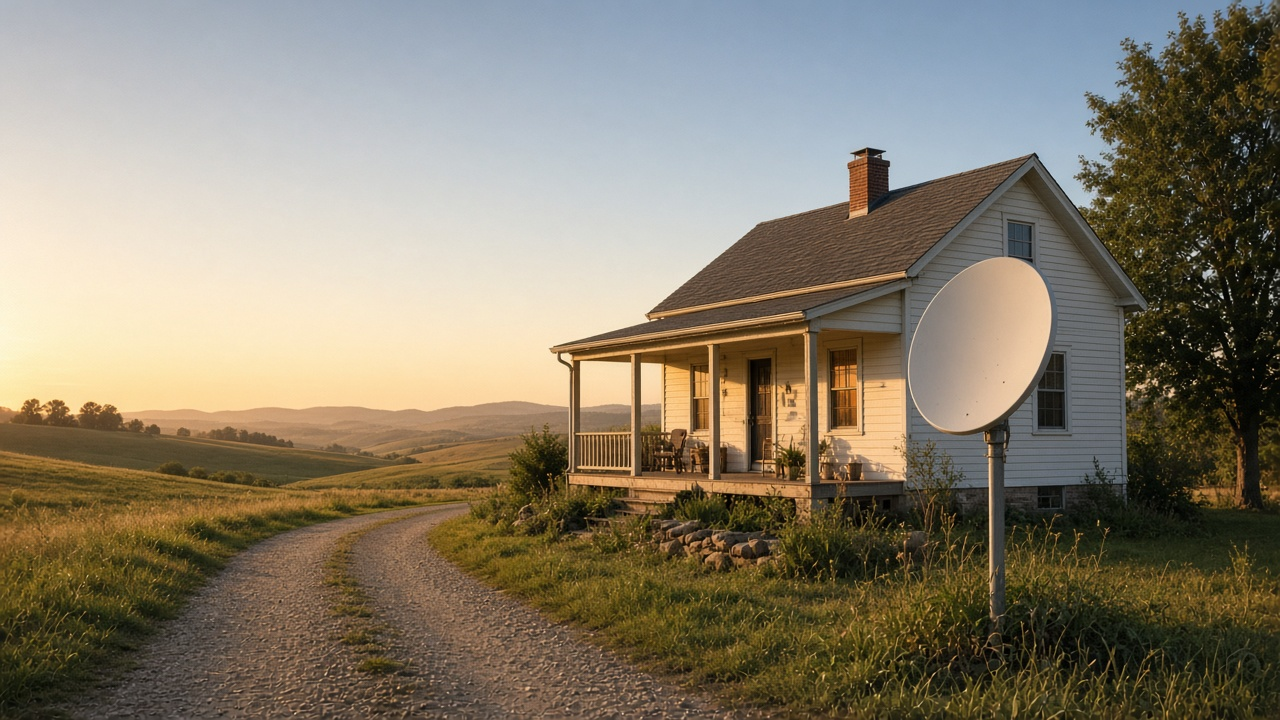
Living far from town is great until a video call freezes. So we looked hard at satellite internet for rural homes, and here is what we found, good and bad.
Disclosure: this post includes my referral link for a satellite internet service. If you sign up through it, we may both get a service credit. It does not cost you more. We are not affiliated with the company, and nobody paid for this post.
Why Rural Internet Is Still So Hard to Get
First, the problem is real. In its 2026 broadband report, the FCC found that about 10.58 million Americans still could not get wired or fixed wireless internet at its 100/20 Mbps benchmark as of June 2025. More than nine million of those people lived in rural areas.
That number makes sense when you think about the cost. A cable or fiber company has to run a line down every road. On a long gravel lane with three houses, the math rarely works for them. As a result, many farms, cabins and small towns still rely on slow DSL, spotty cell signal, or nothing at all.
Satellite internet skips the wire. Instead, a dish on your roof talks to satellites overhead. However, that does not make it perfect, and the rest of this post covers both sides.
Truth 1: Low-Orbit Satellites Changed the Game
Older satellite service used a few big satellites parked very far from Earth. Because the signal had to travel so far, there was a long delay. Games lagged, and video calls felt clumsy.
Newer systems use thousands of small satellites much closer to the ground. For example, the FCC report notes that the largest low-orbit provider reported more than 10,200 satellites in orbit by mid-2026. Since the satellites are closer, the delay is much shorter. In other words, video calls and online school work far better than they used to.
Truth 2: Real Speeds Are Good, but Not Magic
Ads always show the best case, so we looked at real test data instead. Ookla, the company behind Speedtest, reported that U.S. users of the largest low-orbit provider saw a median download speed of 133.8 Mbps and a median upload speed of 19.3 Mbps in the second half of 2025.
That is plenty for streaming, video calls and most home work. Still, there is a catch. Ookla also found that only 44.7% of that provider’s Speedtest users in late 2025 met the FCC’s full 100/20 Mbps broadband standard. That was up from 17.4% earlier that year, which is real progress. Even so, it means about half of users fall short on at least one of those two numbers.
Speeds also change by state and by time of day. In fact, Ookla found that rural users did better than city users in many states, because fewer people share the same patch of sky.

Truth 3: Trees and Weather Matter More Than You Think
Here is the part the glossy photos skip. The dish needs a clear view of a wide piece of sky. A tall tree, a hill or a barn roof can block it and cause short dropouts.
Before you buy anything, check your spot. The provider’s own app may have a tool that scans your sky for obstructions, so use it first. Similarly, heavy rain or wet snow can slow the signal or cut it for a few minutes. Most of the time it comes back fast, but you should know it can happen.
Also, think about where the cable will run. Some people end up mounting the dish on a pole or high on the roof to clear the trees, and that adds work and cost.
Truth 4: The Cost Changes, So Check It Yourself
We are not going to quote a price here. Prices for the hardware and the monthly plans change often, and they differ by plan and by area. Some areas even charge more when the local network is busy.
So the honest advice is simple. Check the current price, plan terms and any data policies on the official site before you order. Then compare that total with what you pay now. Remember to add any mounting gear or a longer cable if your spot needs it.
Truth 5: It Is Not the Only Option
A fair post has to say this clearly. Satellite is not always the best choice, so check these first:
- Fiber or cable. If it reaches your road, it is usually faster and steadier. Look up your address on the FCC National Broadband Map.
- Fixed wireless. Many rural areas now have 5G home internet or a local wireless provider using towers. Often it costs less.
- Local co-ops and grants. Many electric co-ops are building fiber in rural areas right now. Meanwhile, state broadband offices are funding new lines, so ask what is planned near you.
- Other satellite companies. Older satellite providers still sell service, and more low-orbit companies are launching.
If none of those reach you, then low-orbit satellite is often the best real choice left.
Truth 6: Off-Grid Living Needs a Power Plan
Off-grid readers, this one is for you. The dish and its router need steady power all day and night. On a small solar setup, that load adds up, especially in winter when the days are short.
Therefore, check the power use for your hardware on the official specs page before you size your batteries. Some people put the system on a timer or turn it off at night to save power. Likewise, RV owners should look at the travel plans, since a home plan is tied to one address.
Truth 7: Read the Fine Print Before You Order
Finally, read the terms like you would for any big purchase. Look at the return window, whether there is a contract, and what happens if you move. Also check what the plan says about busy times and data use.
One more tip: buy straight from the official site if you want a referral to count. Kits bought from stores or used from a neighbor usually do not qualify for referral credits.
A Quick Checklist Before You Buy
Before you spend a dime, walk through these steps in order. They take about an hour, and they can save you a costly mistake.
- Look up your address on the FCC National Broadband Map and write down every provider listed.
- Call or check the sites of any fiber, cable or fixed wireless companies on that list.
- Next, run the sky scan in the app from the exact spot where the dish would go.
- After that, price out the plan, the kit, and any pole, mount or long cable you might need.
- If you are off the grid, add the power draw to your solar and battery math.
- Finally, read the return policy, so you know how long you have to test it at home.
Once you have done all six, the choice usually becomes clear. Either a cheaper option turns up, or satellite stands out as the one that truly fits.
Is Satellite Internet Right for Your Rural Home?
To sum it up, satellite internet for rural homes has come a long way. If you have no fiber, no cable and weak cell signal, it can turn a dead zone into a place where you can work, learn and stream. On the other hand, trees, weather, power and changing prices are real limits.
So start with the FCC map. Then check your sky with the obstruction tool, and compare the real monthly cost with your other choices. If satellite still wins, it is worth a try.
If you decide to go ahead, you can use my referral link here: check plans and availability here. Disclosure: this is my personal referral link. If you sign up through it and stay subscribed, we may both get a service credit, and you do not pay more. We are not affiliated with the company. Check your current price and the referral offer on the order page.
Want something to read tonight instead? Browse our short fiction stories.
Have you tried satellite internet out in the country? Tell us how it went in the comments below.



Leave a Reply